




Automated home charging reimbursement: what it is and why fleets need it

Key takeaways
- Automated home charging reimbursement reduces manual claims processing and payment reconciliation
- Recorded charging sessions and the applicable electricity rate provide a clear basis for reimbursement
- Moving suitable charging sessions home can reduce energy costs where domestic rates are lower
- A clear reimbursement process helps drivers understand which home charging costs their employer covers
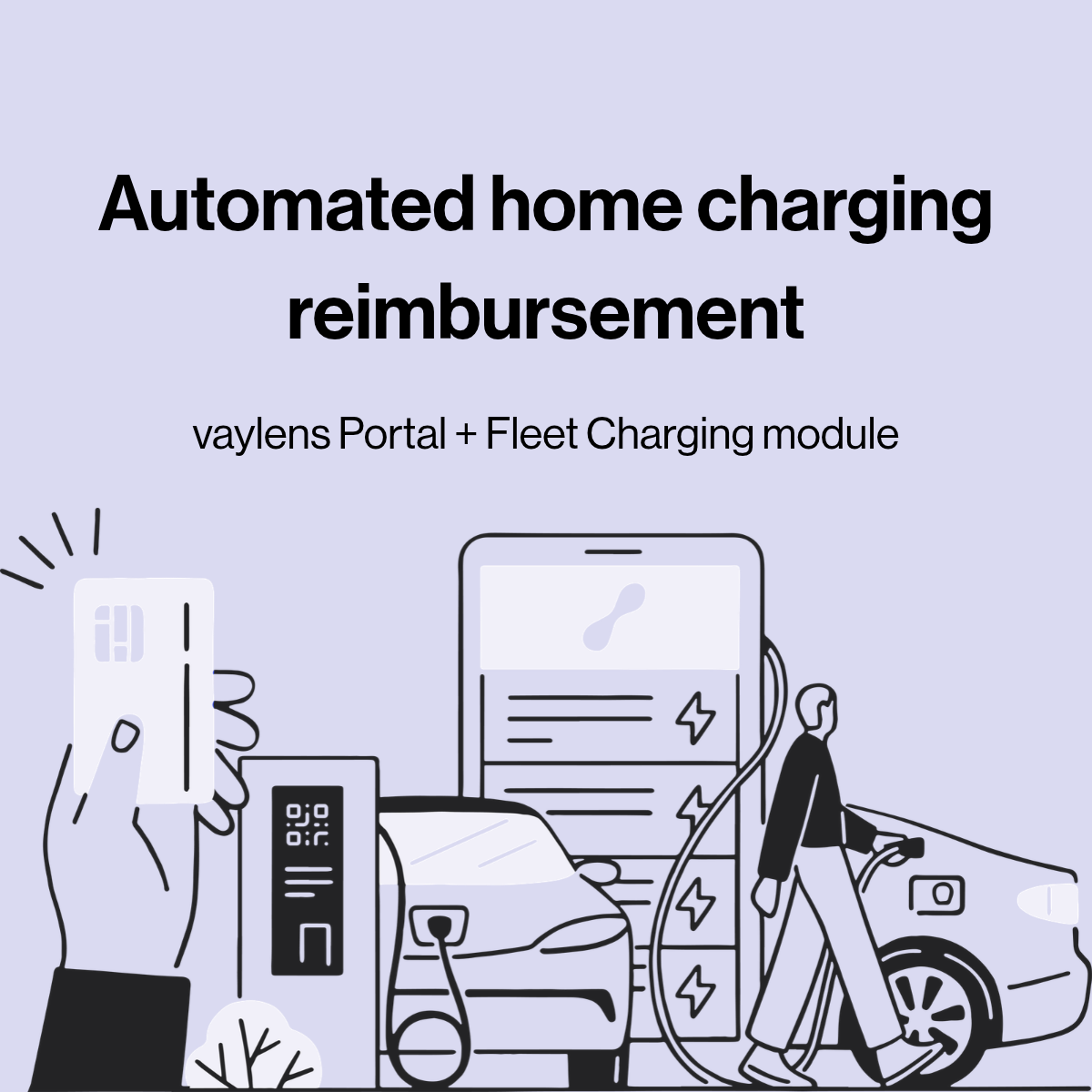
Automated home charging reimbursement helps employers cover eligible company-car charging costs at home by automating session recording, reimbursement calculations and payment processing.
A compatible home charge point connects to the fleet’s charging management software, which records charging sessions and the electricity used. Reimbursement is calculated from the company-car charging covered by the employer’s policy and the applicable electricity rate, rather than the whole household bill. The service then processes payments, subject to any required checks and approvals.
Automating that process can reduce fleet admin, give drivers a clearer reimbursement process and make lower-cost home charging easier to support for the entire business.
Why home charging is so awkward for fleets
When drivers charge at home, the electricity appears on their household bill. The company then needs to establish how much was used for eligible company-car charging and which rate to apply.
That can mean collecting charging records, checking electricity bills and reconciling payments through spreadsheets or expenses. Drivers have information to submit, fleet managers have questions to answer and the Finance department has payments to check.
A household bill alone doesn’t show how much electricity went through the charge point. Without session-level data and a clear reimbursement rate, it’s harder to check that payments match eligible charging costs.
There’s a potential energy saving too. Where domestic electricity is cheaper than public charging, making home reimbursement straightforward removes one barrier to charging at home. Public charging still has a role when drivers need it during their journeys.
What it changes for fleet managers
First of all, it reduces repetitive work. Recorded sessions and automated calculations mean less time collecting individual claims and working out payments. Fleet and finance teams can focus on reviewing rates, approving reports and handling day-today business operations instead.
It also improves visibility. Bringing home sessions alongside depot and public charging gives fleet managers a clearer view of charging activity and costs. For Finance, session-level records support payment reconciliation, year-end reporting and audits.
What it changes for drivers
Drivers don’t need to assemble a separate expense claim for each eligible charging session. Once they’re set up, recorded sessions and the applicable electricity rate provide the basis for reimbursement.
A clear reimbursement policy helps drivers understand which costs are covered, how payments are calculated and when to expect reimbursement. That gives HR and fleet teams a straightforward process to explain when employees move to an electric company car.
What it changes for the business
Where domestic electricity costs less than the public charging it replaces, moving suitable sessions to employees' homes can reduce fleet energy spend. The opportunity depends on drivers having access to home charging, their electricity rates and their journeys.
There’s an administrative benefit too. Less manual claims processing and reconciliation means less staff time spent managing reimbursement. To assess the overall saving, consider those benefits alongside setup and ongoing service costs.
Reducing repeated claims and individual payment handling also makes reimbursement easier to manage as more employees move to electric company cars.
Clear charging records also help the business understand spending and plan charging arrangements. And a straightforward reimbursement policy gives employees one less thing to worry about when considering an electric company car.
How this works in the vaylens Portal
The Fleet Charging module in the vaylens Portal brings home, workplace, depot and public charging activity into one view, helping fleet managers understand where drivers charge and what it costs.
Automatic Home Reimbursement is a paid option within Fleet Charging, with charges depending on the market and setup. It uses recorded home charging sessions to calculate reimbursement and process payments, reducing the need to work out payments and arrange reimbursements separately.
Payment arrangements and charges depend on the market and setup. Our team can explain the home reimbursement options available for your fleet.
Discover the vaylens Portal for fleets in the UK, France and DACH region.
See how it could work for your fleet
Want to spend less time managing home charging claims? Register for a live demo to see the vaylens Portal in action and ask our team about the home reimbursement options for your fleet.
FAQs
Automated home charging reimbursement helps employers cover company-car charging costs at home without a separate expense claim for each eligible session. A compatible, connected charge point records charging sessions, and software calculates reimbursement using the applicable electricity rate. Payments are then processed, subject to the service’s checks and approvals.
The vaylens Portal offers automatic home reimbursement as a paid option within Fleet Charging. The setup, payment arrangements and charges depend on the market.
An existing home charge point may be suitable if it’s compatible with the fleet’s charge point management software (CPMS) and the reimbursement service. Compatibility and connection requirements should be checked before rollout, so employees know whether their current charger can be used. Speak to one of our fleet specialists to get advice on your setup.
Related articles
Guide to choosing an EV charging software partner for car park managers
Guide to choosing an EV charging software partner for car park managers

A guide to EV charging in the public sector
A guide to EV charging in the public sector
CPO vs eMSP in EV Charging: What’s the difference?
CPO vs eMSP in EV Charging: What’s the difference?
How to start an EV charging station business