




A guide to EV charging in the public sector

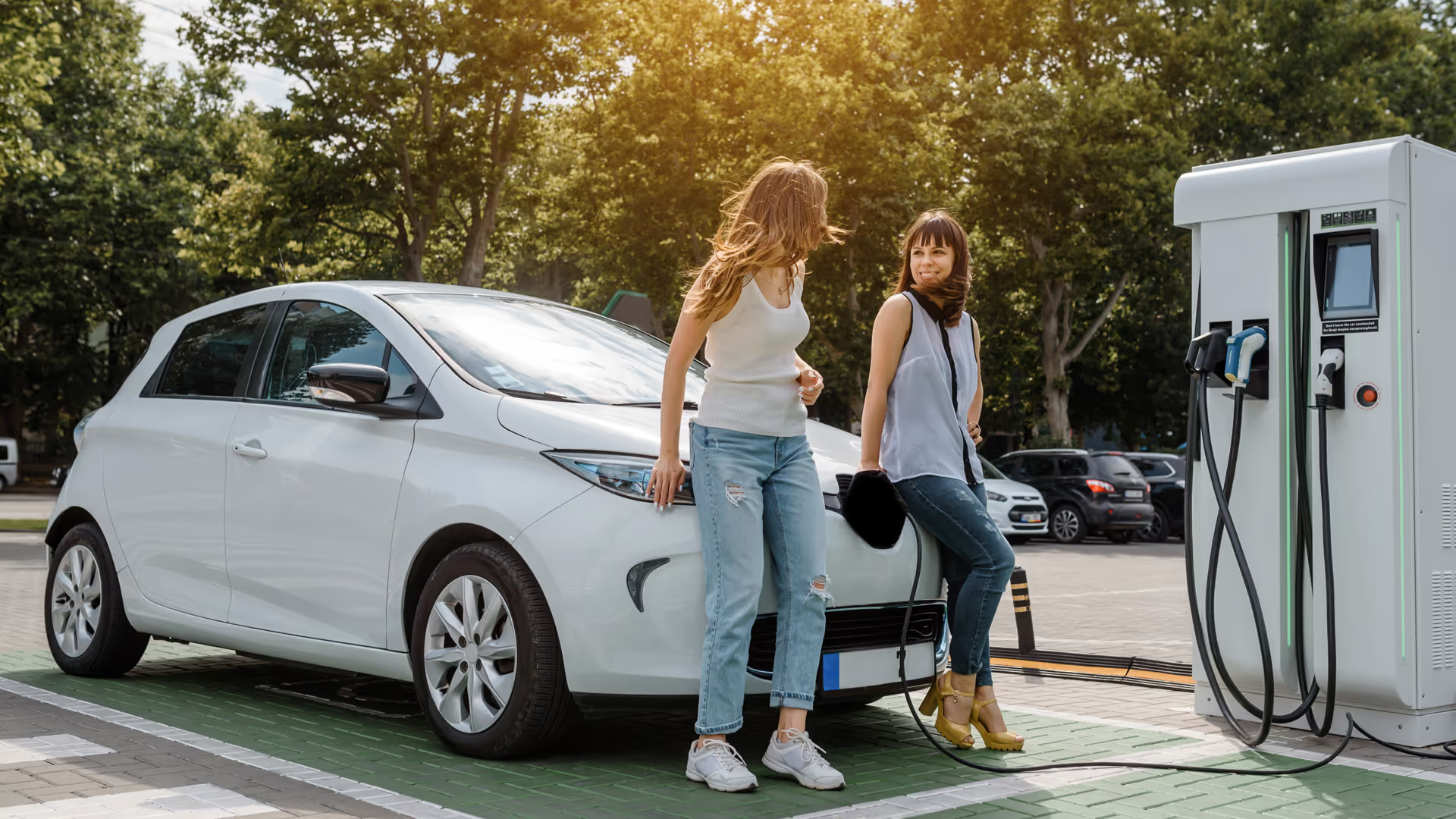
Public EV charging infrastructure plays a key role in making electric vehicles more accessible, reducing emissions and sustainable transportation.
Unlike private setups at homes or workplaces, public EV charge points have to serve a wide range of drivers while balancing investments, regulations and user experience.
For local governments, businesses and investors, setting up public EV charging can be a profitable and impactful decision. But it does come with unique considerations that require careful planning.
To address these challenges, solutions tailored for public sector and energy providers can help streamline deployment, ensure compliance and improve long-term efficiency.
This guide breaks down everything you need to know, from choosing the right charging stations to understanding regulations and selecting the best payment models.
Public vs private EV charging
Before installing a charging station, it’s important to understand how public EV charging companies operate differently from private networks. While both serve EV drivers, their setup, accessibility and regulations vary significantly. Let’s explore the key differences between the two.
Ownership and accessibility
Public charging stations are open to all EV drivers, making them an essential part of a region’s public charging infrastructure. These stations are typically owned by local governments, businesses or third-party operators and require regular maintenance to keep them operational.
On the private side, stations are limited to specific users, such as tenants in a residential building, employees at a workplace or fleet vehicles. Because private stations have controlled access, they often require less upkeep and offer more predictable usage patterns.
Regulations and permits
Public charging stations require approval from government agencies, city planners and sometimes utility providers to ensure they meet safety and zoning regulations. This process can take time and varies across different regions.
Private stations, on the other hand, face fewer regulatory challenges, often requiring only standard electrical permits. However, they don’t benefit from the same level of government funding and incentives available for public EV charging infrastructure.
Revenue and payment models
Public charging stations use various pricing models, including pay-per-use, membership plans and government subsidies. The goal is to make charging widely available while still remaining profitable.
Private stations are often included in rental agreements or employee benefits, meaning users don’t have to pay per session. This setup makes them convenient but limits revenue opportunities for operators.
Public EV charging infrastructure and setup
Setting up public EV charge points requires careful planning to meet the current demand while preparing for future scalability and growth. It’s important to choose the right locations, balance costs and account for accessibility. A well-planned charging network not only benefits EV drivers but also supports local businesses and contributes to urban sustainability efforts.
Types of charging stations
The type of station you install depends on location and usage patterns:
- Level 2 charging: Ideal for shopping centers, offices and car parks, these stations provide a steady charge in 4–8 hours, making them perfect for long-stay parking.
- DC fast charging: Designed for motorways, transport hubs and high-traffic urban areas, these stations can deliver up to 80% charge in 30 minutes but require higher power capacity and investment.
Smart charging and connectivity
Integrating public EV charging infrastructure with management software helps streamline operations. Smart charging technology allows real-time monitoring, dynamic pricing and remote troubleshooting. These features reduce maintenance costs and improve the user experience by providing accurate availability updates.
Power supply and grid considerations
Public charging stations consume a significant amount of electricity, so working with utility providers is crucial to help maintain power supply while reducing expenses. Grid capacity must support high-power stations while allowing for growth in the future. Smart charging solutions help manage electricity demand and prevent overloading.
vaylens supports public charging networks with advanced software solutions, making it easy for you to manage payments, monitor usage and optimise efficiency.
Key locations for public EV charging
Strategic placement of charging stations improves accessibility and increases usage. The best locations include:
- High-traffic urban areas: City centres, commercial hubs and shopping malls attract high foot traffic, making them prime locations for public EV charging. Drivers can charge while they shop, work, or dine, which maximises convenience.
- Transport hubs and motorways: Airports, train stations and major roads serve long-distance travellers who need quick, reliable charging. Installing fast-charging stations in these locations helps reduce range anxiety for drivers and supports EV adoption.
- Near businesses and retail spaces: Partnering with businesses allows for shared investment and provides an extra incentive for customers to visit retail stores, restaurants and hotels. Many companies are already integrating public EV charge points into their customer experience, so this can be a strong starting point.
For these types of deployments, solutions designed for retail and commercial parking can help operators manage infrastructure effectively while delivering added value to both businesses and customers.
Working with public officials and regulations
Partnering with government agencies is essential when setting up public EV charging infrastructure. This process can take time, but proper planning helps prevent delays and unexpected expenses.
Permits and zoning approvals
To install public EV charge points, operators must secure permits and meet zoning requirements. Although the specifics vary depending on which country you’re looking to set up in, this process typically involves:
- Site assessment: Ensuring the location meets safety, accessibility and power capacity requirements.
- Environmental impact checks: Evaluating how installations may affect nearby areas.
- Local authority approvals: Gaining permission from councils, transport agencies or other regulatory bodies.
- Utility coordination: Working with energy providers to confirm grid compatibility.
Government incentives and public-private partnerships
Many governments offer grants, tax credits and subsidies to encourage investment in public EV charging. Partnering with local authorities or private businesses can provide funding and improve infrastructure rollout.
Various EU programs provide financial support for public EV charging projects which greatly helps to reduce upfront costs. Some noteworthy examples include the EU Alternative Fuels Infrastructure Facility (AFIF), which funds EV charging networks along major transport corridors, and the Connecting Europe Facility (CEF), which supports infrastructure that aligns with the EU’s Green Deal.
Many countries also have national grants, such as Germany’s KfW 439 for municipal charging stations and France’s Advenir Program, which subsidises public charging installations.
Other key opportunities include:
- Public-private partnerships: Collaborating with local councils, transport agencies or commercial property owners to share costs and responsibilities.
- Tax incentives: Reducing operational expenses through rebates or deductions for EV infrastructure investments.
- Green energy incentives: Additional funding for projects using renewable energy sources.
Best payment models for public EV charging
A flexible payment system makes public charging more accessible and profitable. Here’s a look at some common models:
Pay-per-use vs. subscription models
Pay-per-use charging allows drivers to pay per session which provides flexibility for occasional users. Membership models offer discounted rates or unlimited charging for a monthly fee and are more appealing to frequent EV drivers.
Contactless payments and mobile apps
Most public EV charging companies now support app-based payments, RFID cards and contactless credit card transactions. These methods offer convenience and reduce friction for users, making their overall experience more pleasant.
Government-funded free charging
Some cities offer free public charging through government subsidies to promote EV adoption. While this model doesn’t generate direct revenue, it can increase foot traffic to partnered businesses or locations.
With vaylens’ payment integration solutions, you can set up multiple payment options and automate transactions to streamline operations.
Final thoughts and future growth
As EV adoption rises, public EV charging companies play an important role in expanding the charging network.
The integration of EV charging into urban planning is accelerating, with governments and private entities working together to create seamless and accessible networks.
With continued investment into public charging infrastructure, it’s a profitable sector that’s worth exploring.
Are you looking to set up or optimise your public charging network? vaylens offers the tools to help you manage payments, monitor usage and scale efficiently—get started.
More electric car owners will rely on public charging in the next five years, use vaylens to make electric mobility accessible to everyone
FAQs
You can track charger usage, energy consumption and revenue in real time through our platform.
We've taken care of all the regulatory requirements, including calibration laws, AFIR compliance, and UK Charging Regulations, so you can focus on simply managing your charging infrastructure.
Related articles

How to better manage your EV fleet charging
How to better manage your EV fleet charging

How to get funding for your EV charging station business in Europe and the UK