




CPO vs eMSP in EV Charging: What’s the difference?

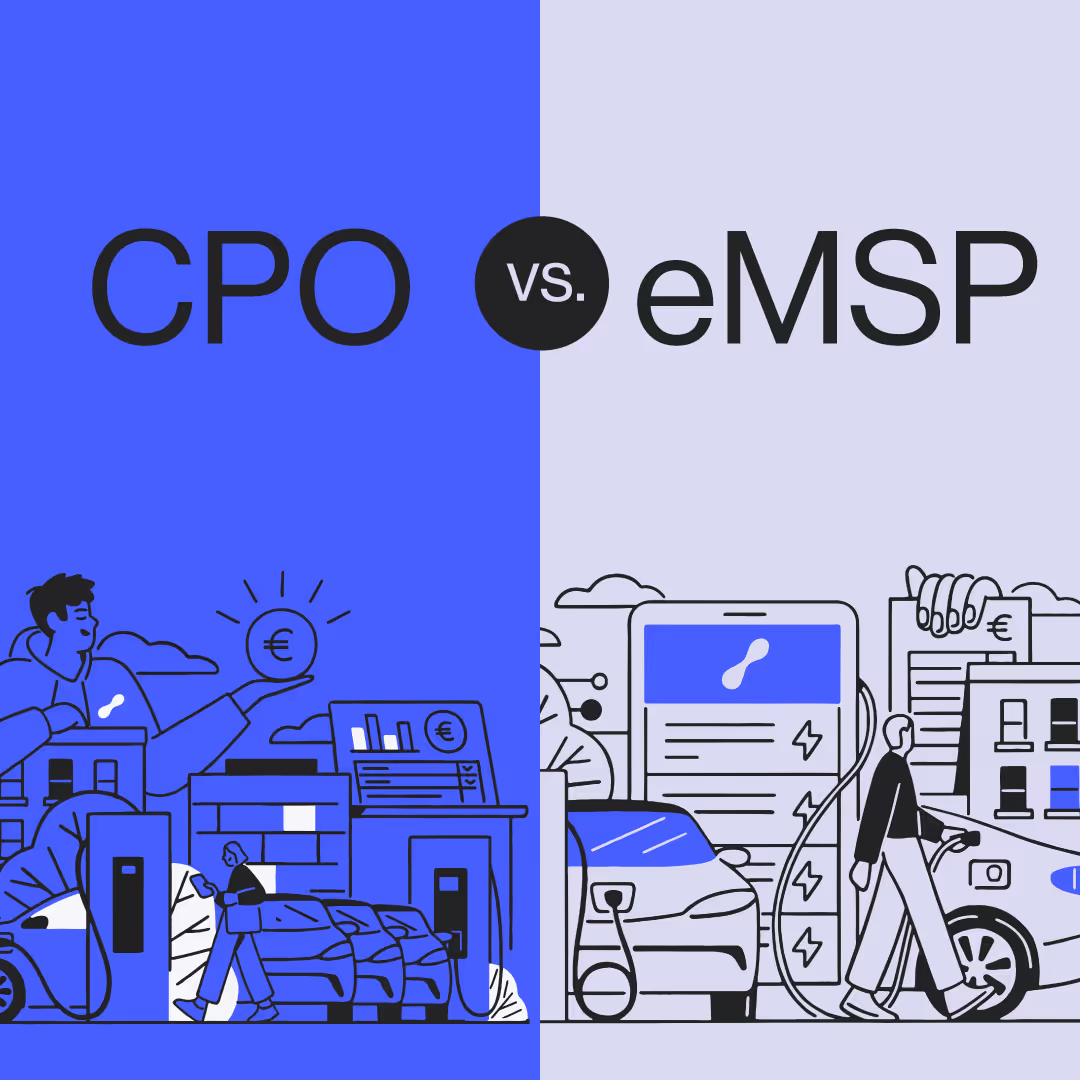
The electric vehicle (EV) charging industry is full of acronyms. Two of the most common and most misunderstood are Charge Point Operator (CPO) and Electric Mobility Service Provider (eMSP).
This article explains the differences between CPOs and eMSPs in EV charging for businesses that directly or indirectly work with EVs and their charging infrastructure. It also describes how the two roles interact, why that distinction matters for different stakeholders and how EV charging management software, like vaylens, helps them work together.
What is a CPO in EV charging?
A Charge Point Operator (CPO) is responsible for the physical EV charging infrastructure, i.e., the charging stations you see on public roads or in private spaces.
In practice, the CPO installs, manages, and maintains the charge points. This includes commissioning new hardware, monitoring the availability of stations, resolving faults, setting charging tariffs and access rules, and meeting regulatory or calibration requirements for the infrastructure network. Everything related to keeping stations operational and compliant with regional regulations sits on the CPO side.
Often, CPOs will carry out the installation, maintenance and day-to-day technical support of charging stations that are, in fact, bought and branded by another company entirely. Some CPOs are also the owners of charging infrastructure, though this isn’t always the case.
This explains why CPOs aren’t limited to a single type of organisation. Property developers often act as CPOs when deploying charging stations in residential or mixed-use areas; they provide EV charging as an added-value service to tenants or guests at specific rates. Fleet operators frequently take on the CPO role (rather than just the owner) when managing depot or workplace charging. Local authorities and municipalities also operate as CPOs when rolling out public charging infrastructure and remain responsible for the upkeep and maintenance of this public service.
There are different operational challenges for each setup, but all depend on reliable backend systems to manage charging stations efficiently and to work with eMSPs to create a harmonious EV charging experience for drivers. This is where EV charging management software, like vaylens, becomes an essential part of the EV charging business.
vaylens for Charge Point Operators
vaylens is neither a CPO nor an eMSP. Specifically, we’re a software provider that helps CPOs or infrastructure owners manage, monetise and scale EV charging infrastructure, while supporting the collaboration with eMSPs through open, hardware-agnostic software.
The vaylens platform provides the technical foundation that helps CPOs and eMSPs work together and communicate to create a better EV charging ecosystem for drivers while maintaining distinct roles. The solution is modular by design and offers different capabilities depending on the technical setup and goals of each infrastructure operator or owner.
vaylens for workplace charging
What is an eMSP in EV charging?
An electric mobility service provider (eMSP) focuses on access and services for drivers rather than on the physical charging stations or charge points.
Unlike CPOs, individual eMSPs do not own or operate charging hardware unless part of a mobility company covering both sides. Their role is to make existing charging networks usable by providing the digital layer that drivers interact with when charging (and looking for a place to charge). This is typically done via a mobile app or with an RFID card.
However, it’s important to remember that EV drivers in the EU can charge on public charging networks without an eMSP subscription, as set out by the Alternative Fuels Infrastructure Regulation. Learn more about ad hoc EV charging payments here.
From a driver’s perspective, the eMSP is often the most visible part of the EV charging ecosystem; it’s the app they open to find a charging station, the interface they use to start a session and the company on the name of the invoice they receive for charging. As such, eMSPs operate driver-facing payment and billing services, charging network navigation and customer support.
From a systems perspective, eMSPs depend on accurate and reliable data from CPO platforms to make electric mobility a smooth and viable option for drivers. Availability, (original infrastructure) pricing and session information all originate on the CPO side and must be shared seamlessly with eMSPs for the driver experience to work. EV charging management software helps CPOs establish and communicate these tariffs, settlement flows and access rules.
How CPOs and eMSPs work together
The connection between CPOs and eMSPs depends on interoperability, which allows different platforms, hardware models and service providers to work together. Standardised communication protocols play different roles in this ecosystem.
OCPP allows charging stations from various manufacturers to connect to backend systems such as vaylens, while roaming protocols like OCPI support data exchange, authorisation and billing settlement processes between CPO networks and eMSPs.
For CPOs, interoperability delivers more flexibility when choosing hardware and the ability to work with multiple eMSPs, with the reduced risk of vendor lock-in. For eMSPs, it supports broader network coverage, more consistent access for drivers and more reliable charging session data.
vaylens supports the collaboration between CPOs, eMSPs and drivers through its hardware-agnostic platform that accommodates charging stations from multiple vendors. Our platform centrally manages protocol communication, and we offer a free testing service to help CPOs confirm hardware compatibility before deployment.
Test your hardware’s compatibility with vaylens
Different organisations interact with CPOs and eMSPs in different ways. A housing developer may work directly with a CPO to deploy and manage on-site charging stations. A fleet operator may prioritise access to multiple eMSPs so drivers can charge across locations when in transit. Public sector bodies often require a combination of both, balancing operational control and oversight with broad public and semi-public accessibility.
Understanding who does what, and where responsibilities sit, is critical for operations managers and other professionals planning EV infrastructure or expanding an existing charging network.
Key takeaways: CPOs vs. eMSPs explained
- Understanding the difference between CPOs and eMSPs helps businesses thrive within and add value to the EV charging ecosystem more effectively; this is a good thing for electric mobility as a whole.
- CPOs are responsible for operating and maintaining charging infrastructure, while eMSPs focus on access and services for drivers. Both roles are essential, but they solve different problems.
- Interoperability in EV charging is what allows CPOs and eMSPs to work together; software platforms like vaylens act as the bridge between hardware, operators and service providers.
- eMSPs aren’t always needed; in fact, AFIR mandates that all EU public EV charging networks must support ad hoc payments, where drivers interact solely with the charging station (operator), rather than via an eMSP intermediary.
The right choice for Charge Point Operators
Understanding the differences between CPOs and eMSPs in EV charging helps businesses and drivers make better decisions around infrastructure, partnerships, navigation and platforms.
CPOs keep EV infrastructure running, and eMSPs make them usable (if they’re not AFIR-mandated public networks). vaylens helps them work together by handling the technical backend processes that often cause headaches for both parties.
Talk to a vaylens specialist today and find out how our platform makes your EV charging operation more efficient and valuable.
Simplify EV charging management
FAQs
Our software allows businesses to provide convenient, manageable and easily scalable EV charging for employees and visitors, improving your overall sustainability and workplace satisfaction.
You can learn how to use the vaylens software by visiting our Getting Started Guide
Yes, you can easily migrate a bulk of charging points by importing a prefilled Excel file. You can download a template for your file from your vaylens account.
Related articles
What AFIR means for CPOs and EV drivers
What AFIR means for CPOs and EV drivers

Germany’s €3 billion boost for electric mobility: why this time feels different
Germany’s €3 billion boost for electric mobility: why this time feels different

EV charging economics for fleet operators and CPOs: soundbites from the 2024 Fast Lane virtual conference