




Shell NewMotion charge point management system (CPMS) discontinued: what operators can do now

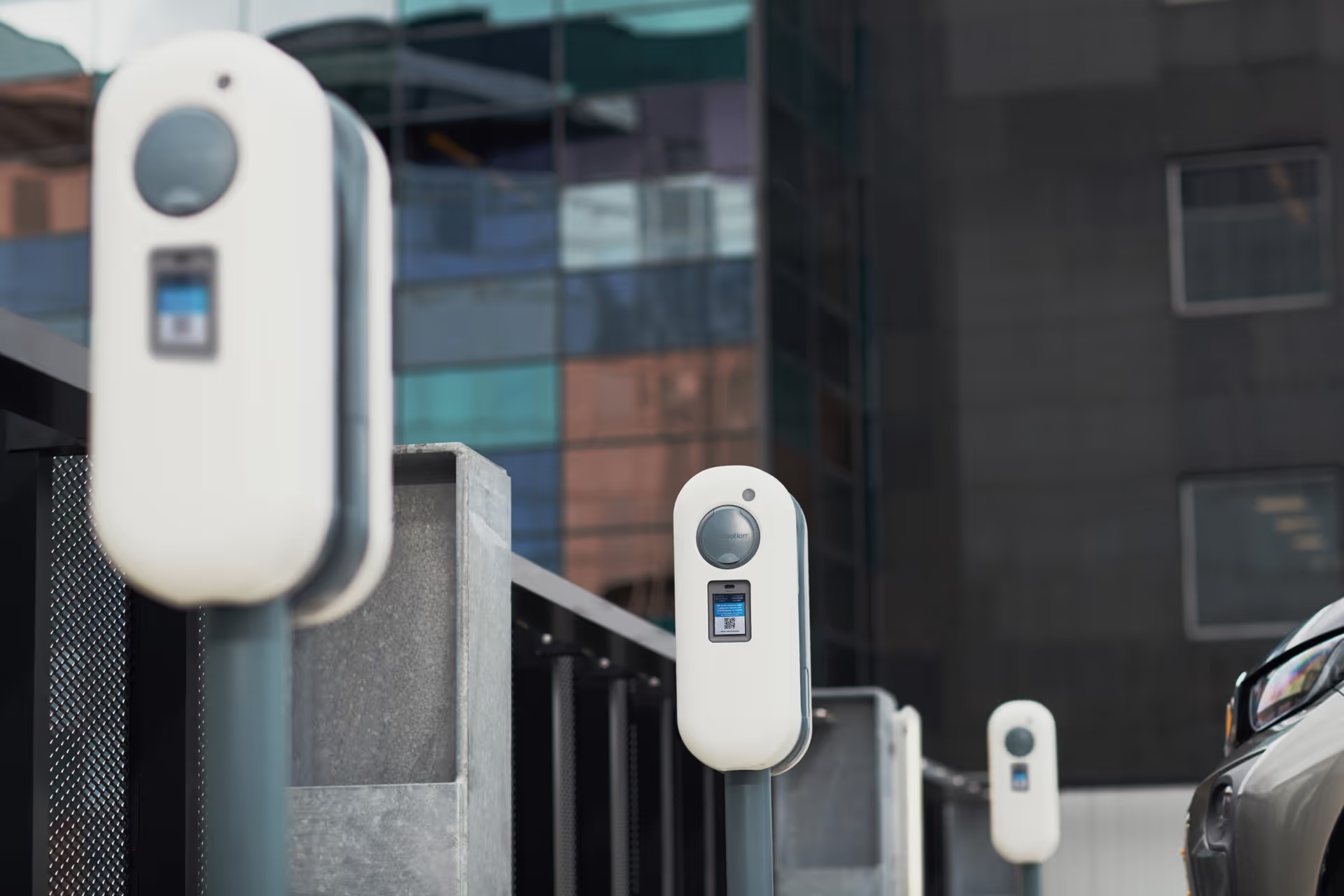
Following the discontinuation of the Shell NewMotion charge point management system (CPMS), many charge point operators are facing challenges in continuing the operation of their existing EV charging infrastructure.
The situation is relevant for charge point operators in Germany, France, Belgium, Luxembourg, the Netherlands, and the United Kingdom, where a significant number of installed charge points have historically relied on Shell NewMotion. With their service no longer supported, questions around operability, security and long-term viability have become increasingly pressing.
Can existing Shell NewMotion charge points be connected to another CPMS?
Many Shell NewMotion charge points are built on open technical components and support standard communication protocols such as OCPP. In principle, this means that reconnecting them to an alternative charge point management system (CPMS) should be possible.
In practice, however, this depends on several critical factors. To migrate existing hardware, charge point operators typically require:
- access to charger configuration interfaces
- valid credentials, certificates and identities
- firmware that supports endpoint changes and security updates
Following the discontinuation of the Shell NewMotion charge point management system (CPMS), this access is often no longer available. Without a supported way to modify endpoints or security-related settings, reconnecting charge points to another CPMS can become complex, unreliable or non-compliant.
What the Shell NewMotion CPMS discontinuation means for charge point operators in Germany
For affected charge point operators, the discontinuation of the Shell NewMotion charge point management system (CPMS) commonly results in:
- limited or no backend access for existing charge points
- missing configuration credentials or disabled interfaces
- reduced operational visibility, monitoring and remote control
- uncertainty around secure operation, compliance and long-term support
As a result, many operators are reassessing their current setup rather than relying on unsupported workarounds or short-term fixes.
Replacing your charge points and CPMS with vaylens
If you are affected by the discontinuation of the NewMotion charge point management system (CPMS), vaylens supports a structured and clearly supported transition.
Instead of attempting to reconnect legacy configurations under uncertain conditions, the focus is on replacing unsupported hardware setups with modern, openly designed AC charging stations combined with an independent charge point management system (CPMS).
This approach allows charge point operators to restore stable operations while creating a more sustainable foundation for future growth and regulatory change.
Why a hardware-agnostic CPMS is a long-term advantage
Integrated hardware and backend solutions such as Shell NewMotion can simplify initial deployments, as hardware and software are delivered as a single package. Over time, however, operational requirements, regulations and technologies evolve.
A hardware-agnostic charge point management system (CPMS) enables charge point operators to decouple hardware decisions from backend operations. Key advantages include:
- easier replacement or upgrading of charging hardware
- consistent backend processes across different charger manufacturers
- clearer management of access rights, credentials and security settings
This model supports long-term planning without locking operations into a single hardware ecosystem.
Switching from Shell NewMotion to vaylens
For many Shell NewMotion charge points, reconnecting existing hardware is not a reliably supported option due to missing configuration access and firmware-level dependencies.
In these cases, hardware replacement is often the most predictable and stable solution.
The recommended transition approach consists of:
- replacing existing charge points with comparable, openly designed AC charging stations
- onboarding vaylens as a scalable and transparent charge point management system (CPMS)
Together with experienced hardware partners, vaylens supports the full transition process, from initial assessment and hardware selection through to onboarding and go-live.
Key takeaway and next steps
The discontinuation of the Shell NewMotion charge point management system (CPMS) highlights the importance of clear access rights, defined support responsibilities and long-term operability in EV charging infrastructure.
By choosing openly designed charging hardware and a hardware-agnostic CPMS, charge point operators can reduce operational risk and build a more stable, flexible setup for the future.
If you are affected by changes to the Shell NewMotion charge point management system (CPMS) and would like to discuss suitable next steps, feel free to get in touch here.
FAQs
Yes, you can easily migrate a bulk of charging points by importing a prefilled Excel file. You can download a template for your file from your vaylens account.
Minimal involvement is required. Our migration team handles all technical tasks, providing checklists and updates to keep you informed.
The timeline varies based on the number of chargers, though most migrations are completed in phases over a few weeks to ensure minimal downtime.
All essential data, including EVSE-IDs, user accounts, settings, RFID cards and charging history will be seamlessly transferred to vaylens.
Related articles

EV charging economics for fleet operators and CPOs: soundbites from the 2024 Fast Lane virtual conference
EV charging economics for fleet operators and CPOs: soundbites from the 2024 Fast Lane virtual conference

Germany’s €3 billion boost for electric mobility: why this time feels different
Germany’s €3 billion boost for electric mobility: why this time feels different
What AFIR means for CPOs and EV drivers